
Types of Elevators Used in Residential and Commercial Buildings
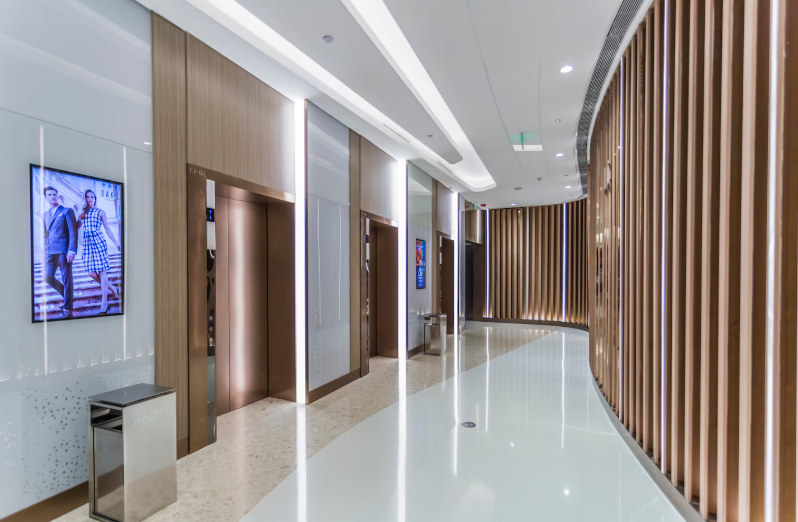
Today, elevators have emerged as much more than a means for vertical transportation systems; they are now critical to efficiency, safety and user experience in buildings. From high-rise residential towers to complex commercial spaces, the choice of elevator system plays a critical role in defining performance, energy consumption and long-term reliability.
Understanding the different types of elevators available can help developers, architects and property owners make informed decisions based on building requirements, traffic patterns and design goals.
A. Based on Mechanism
1. Traction Elevators
Traction elevators are one of the most common systems used in residential and commercial buildings. They work on a steel rope or belt mechanism and counterweight system, with an electric motor powering the system.
Key Features:
- Smooth and efficient operation
- Suitable for mid to high-rise developments
- Energy-efficient, especially with regenerative drives
- Ability to deal with large passenger volumes
There are two primary types of traction elevators:
- Geared traction elevators – Suitable for moderate-speed applications.
- Gearless traction elevators – Designed for high-speed and high-rise applications.
Modern traction systems are often equipped with advanced control technologies that optimize travel time and reduce waiting periods, making them a suitable choice for commercial elevator installations.
2. Hydraulic Elevators
Hydraulic elevators use a piston-driven system where the elevator car is lifted by fluid pressure. These are usually used in low-rise structures, such as residential complexes or small commercial properties.
Key Features:
- Cost-effective installation
- Ideal for structures having 5–6 floors
- Quiet operation
- Minimal structural requirements
Hydraulic elevators are less complex and reliable, but they can consume significantly more energy than traction elevators. However, they remain a practical solution where space constraints or building height limit other options.
B. Based on Usage
1. Passenger Elevators
Unlike freight elevators, passenger elevators are used specifically for people movement and often need to operate quickly and smoothly. These are commonly found in residential apartments, office buildings, malls and hotels.
Key Features:
- Customizable interiors and finishes
- Advanced safety systems
- Smart destination control systems
- High-speed capabilities for tall buildings
In commercial settings, many passenger elevators are combined with intelligent dispatch systems that optimize the flow of passengers to their destination floors and greatly increase efficiency during busy hours.
2. Service Elevators
Service elevators, commonly known as "staff elevators," are utilized within hotels, hospitals and commercial buildings for transporting staff, equipment and supplies without disrupting passenger traffic.
Key Features:
- Separate operation from the main passenger elevators
- Optimized for operational efficiency
- Durable interiors for heavy usage
They play a crucial role in maintaining smooth backend operations, especially in high-traffic environments.
3. Freight Elevators
Among the commercial elevator types , freight elevators are designed to transport heavy materials and play a crucial role in commercial, industrial and logistics settings.
Key Features:
- High load-bearing capacity
- Durable construction
- Large cabin size
- Enhanced safety mechanisms
These elevators are widely used in warehouses, manufacturing units, shopping centers and hospitals where companies need to transport goods and equipment without interrupting passenger traffic.
C. Based on Utility
1. Residential Elevators
Residential elevators are designed to provide safe, comfortable and efficient mobility within apartment buildings, residential towers, villas and private homes.
Key Features:
- Smooth and quiet operation
- Energy-efficient performance
- Compact and space-optimized designs
- Enhanced accessibility for all age groups
- Customizable interiors to complement residential aesthetics
2. Commercial Elevators
Commercial elevators are built to handle high passenger traffic in office buildings, hotels, hospitals and mixed-use developments while ensuring speed, reliability and operational efficiency.
Key Features:
- High-speed operation for efficient vertical transportation
- Advanced traffic management systems
- High passenger handling capacity
- Energy-efficient technologies
- Reliable performance for continuous operation
3. Retail Elevators
Retail elevators are designed for shopping malls, retail centers and entertainment complexes where passenger flow and accessibility are critical to the visitor experience.
Key Features:
- Spacious cabins to accommodate high footfall
- Smooth operation during peak traffic periods
- Enhanced accessibility for shoppers and families
- Modern and aesthetically appealing interiors
- Intelligent control systems for efficient passenger movement
4. Home Elevators
Home elevator types are smaller-scale systems built for private homes that provide convenience, improved accessibility and increased value to your property.
Key Features:
- Custom-designed to fit residential layouts
- Quiet and smooth operation
- Increased safety for users with mobility impairments and elderly members of the household
- Aesthetic integration with interiors
Choosing the Right Elevator System
Selecting the right elevator options for apartments or commercial buildings involves evaluating several factors, including:
- Building height and structure
- Expected traffic volume
- Energy efficiency requirements
- Available space
- Budget and lifecycle costs
For commercial buildings, high-speed traction or MRL systems are often ideal due to their efficiency and scalability. In residential settings, hydraulic or compact MRL elevators may be the best elevator for home , depending on the building size and usage patterns.
Elevating Performance with Advanced Technology
Utilizing technology advancements provides higher levels of performance. Leading manufacturers of elevators deliver outstanding and innovative features that enhance elevator efficiency, safety and sustainability.
Among the various innovations reshaping the elevator industry, regenerative drives, IoT-based monitoring systems, predictive maintenance and touchless controls are considered some of the most prominent technologies.
Fujitec strongly supports precision-engineered systems that combine technological precision with reliability. Today’s elevator systems are revolutionizing vertical transportation through improved user comfort, operational efficiency and sustainable value.